

Egyptian Paste Beads
I have been a little bead obsessed these days. I have been reading a book on coloured clay and one of the topics in the book was on making Egyptian Paste, also known as Egyptian Faience. When I was in school, one of my classmate made some of this up. It is quite unusual to work with as it is soda based and not so clay based even though there is clay in it.
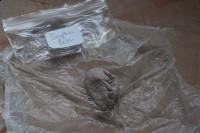
Egyptian Paste contains few plastic ingredients and cannot be used the same way as plastic clay. The body is short with very little plasticity. It can also be purchased from commercial suppliers and can prove to be more user friendly. It is known as the self glazing clay which is a term given to a body which when fired forms it own glaze on the surface without any further additions. It is a mixture of sand, clay, feldspar and sodium compounds. The soluble salts rise to the surface while it is drying, and this layer of salt has the effect of both fluxing the surface and lowering the temperature at which the mixture vitrifies.
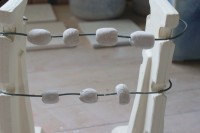
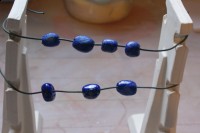
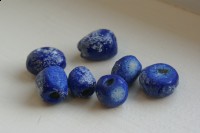
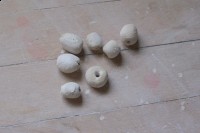
This material was quite a challenge to work with as it doesn’t hold its shape due to lack of plasticity. It was definitely a lesson in learning how different materials react with one another. I am going to continue to explore the limits of working with this paste. Once these beads were out to the kiln, you could really see the effects of the soda in the light.